
Skating to Exist While Palestine Is Being Torn Apart
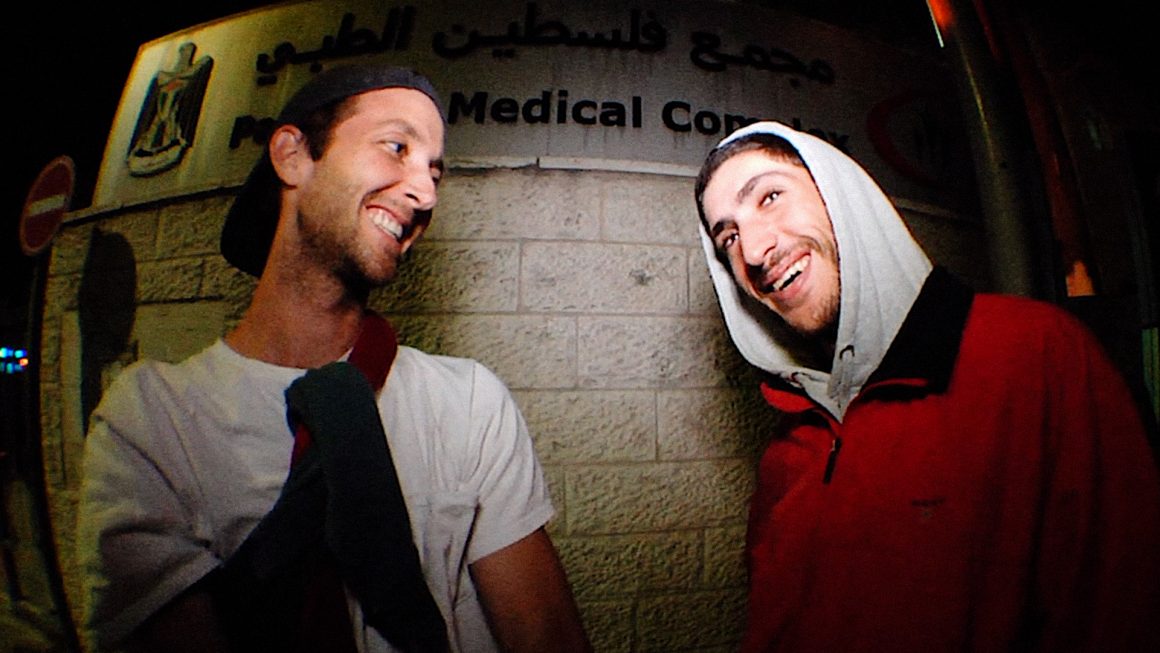
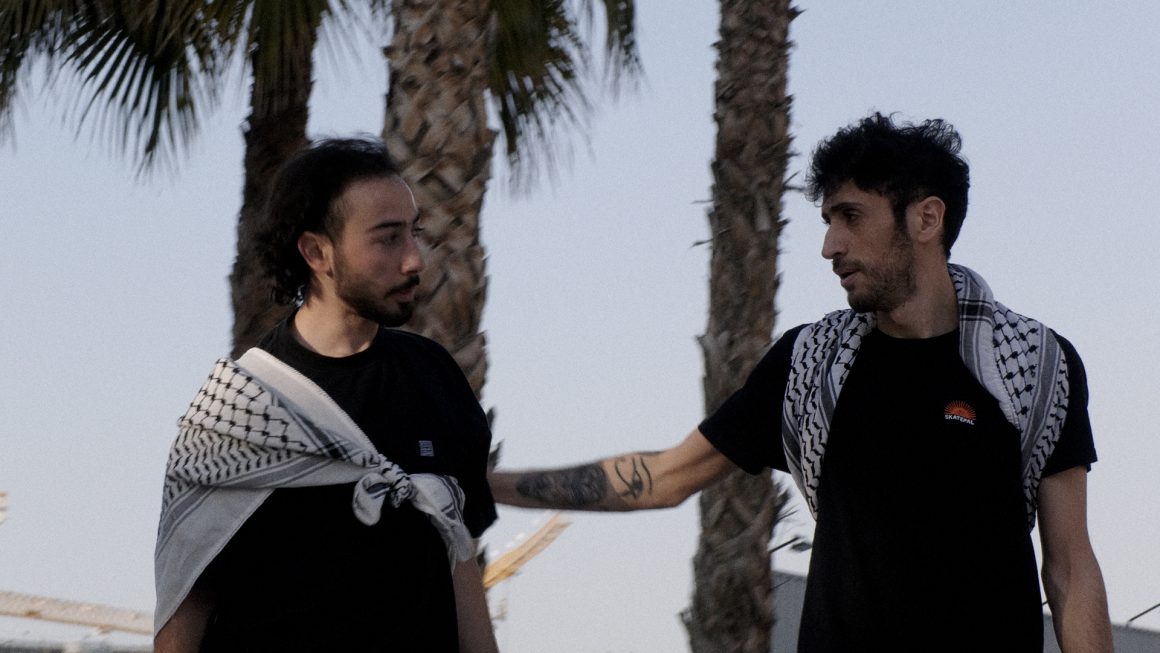
When we first heard about the film, it was through our friend Guillaume from the PSSFF, a documentary that follows Palestinian skater Aram Sabbah as he travels to Dubai in the hope of qualifying for the Olympics, only to be confronted with the growing distance between his personal ambitions and the devastation his country is facing. Through his journey, the film reveals how skateboarding becomes both a refuge and a form of resistance.
The “Olympics” angle didn’t interest us at all, but it served as a starting point for the documentary directed by Markus Bengtsson and Viktor Telegin. Aram Sabbah’s story, on the other hand, deeply moved us, as did the ongoing tragedy in Palestine.
EXIST isn’t a film about athletic performance, for that, you got fucking RZ or L’Équipe. Instead, the documentary uses the competitive setting as a backdrop to highlight the intimate struggle of a man who constantly thinks about his homeland, continuously bombed, and who tries to use his visibility to draw attention to what his people are going through.
We spoke with Markus, who shared the behind-the-scenes of the shoot as well as the message he hopes to convey through his documentary.
Can you introduce yourself?
My name is Markus Bengtsson, also known as @makkebengtsson. That’s my nickname, and people often get confused when I introduce myself in different skate contexts, so I just want to make it clear: my real name is Markus.
I’m a freelance videographer and photographer, and I also work part-time as a designer for Poetic Collective and a teacher at Bryggeriet High School here in Malmö. That’s where I live, although I’m not originally from here. I come from a small town called Halmstad, about an hournorth of Malmö, on Sweden’s west coast. Right now, everything I do is happening in Malmö.
How did the idea of making Exist come about?
It actually started with me and Viktor, who runs CHPO, the Swedish eyewear brand. They have a skateboarding program with riders like Ali Boulala, Vanessa Torres, and Ryan Lay. At one point, he had Aram Sabbah, the main person in the documentary, hanging out and having dinner at his place in Stockholm together with Aram’s partner.
Aram told him he wanted to represent Palestine in the Olympics, and that he had gotten an opportunity through Kenny Reed, who is a real legend. Kenny has strong connections to non Western skate communities. He is the coach of the Thai national team and knows all the rules, regulations, and the right people. Thanks to him, Aram managed to get access to a wildcard for the Olympic qualifiers on the road to Paris.
While Aram was at Viktor’s place, he asked him, “Should I do it or not?” Eventually he decided he would. That is when Viktor started thinking about making a documentary, because we had already made other documentaries together. We made the Beirut documentary “SNOUBAR, When Least Expected” about the first skatepark in Beirut.
So that is essentially how it began. Viktor came to me and said: “We should film this. You are in Malmö.” Aram was coming to Malmö to train with John Dahlquist, the vice principal of Bryggeriet High School, who coached him during the whole journey, not just with tricks but also with the mental preparation needed for something like this.
Around Aram’s birthday, we were all out having dinner and Viktor brought up the idea again: “Should we film it?” Aram just said, “Fuck it, let’s go.” And basically, we started filming the next day. I got the opportunity to follow him starting from that wildcard spot Kenny Reed helped secure for the qualifiers in Dubai. Viktor, the other director, pushed the idea that we needed to capture all of this on camera.
We already knew each other, but not extremely well. So when I started filming him, our relationship developed quite a bit because suddenly we were spending a lot of time together with me constantly having a camera in his face. You can imagine.
Did you travel to Palestine and did you see what the skate scene is like over there?
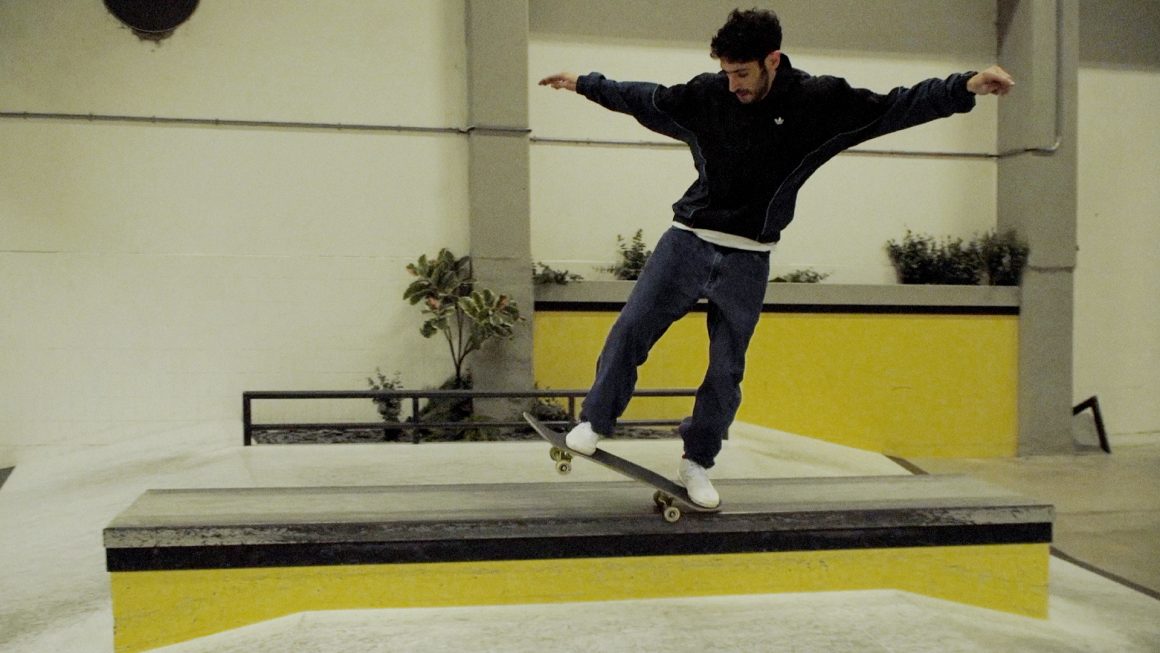
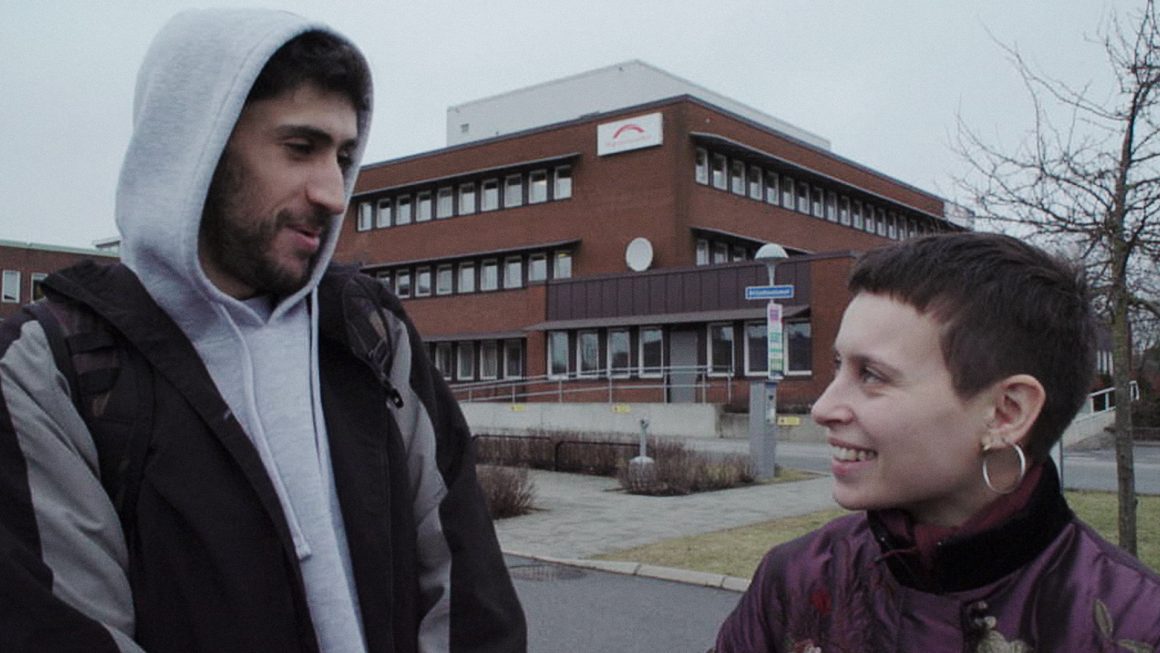
That is the thing: I have never been to Palestine. Aram obviously lives there, and Viktor has been there as a volunteer for SkatePal. Before this documentary even started, we were supposed to go to Palestine in 2023. We had already booked our tickets, me and Viktor, to go and film another documentary on the twenty third of October 2023. But when the events of the 7 of October happened, all flights were cancelled and we could not go. The project just disappeared. Even the possibility of going to the West Bank, to Ramallah, and being there with Aram became harder than before.
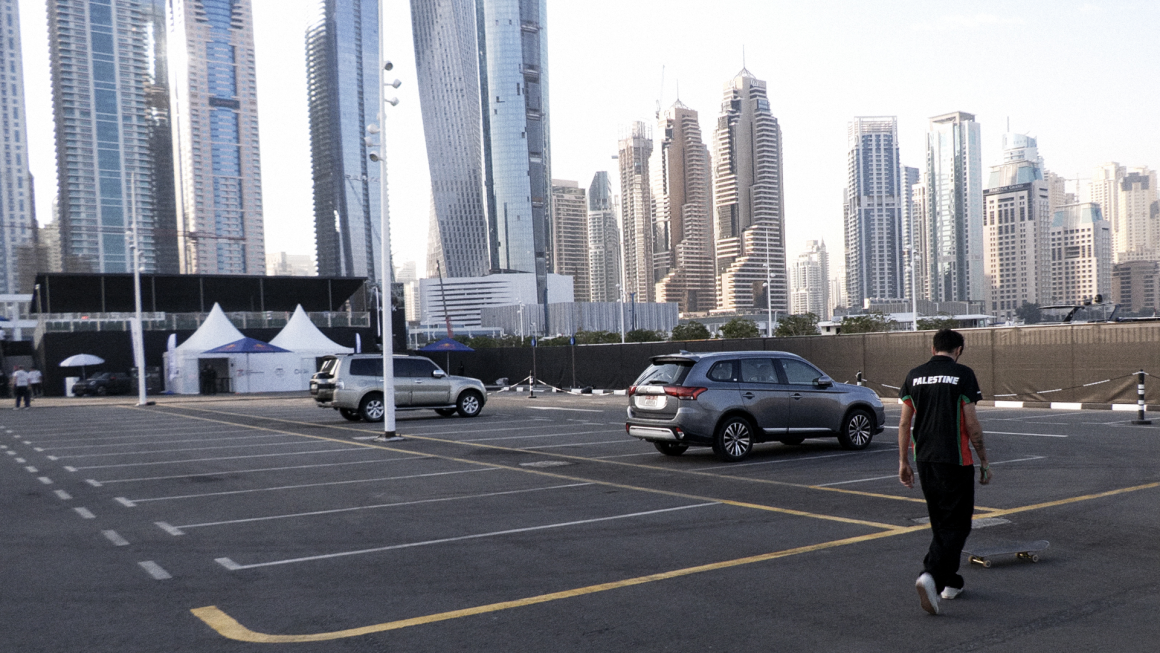
Aram ended up flying to Sweden because his girlfriend is half Palestinian and half Swedish, and she currently lives in Sweden. So he has a connection to Malmö as well, and he goes back and forth. The documentary does include some parts filmed in Palestine, but most of it was shot in Malmö and then in Dubai. It works like a timestamp. It shows Aram’s life at that very moment, what is happening around him, and what is going on in his mind during that specific period of his life, over the course of those one month.
We did not want to focus too much on everything you see in the news or on social media, where you are constantly exposed to awful images.
With your documentary, did you want to go beyond that?
We did not want to cover all of that. We all see the devastation and it is horrible. We could have chosen that direction and focused on showcasing it, but instead we wanted to focus on this individual, his journey and his emotions. He is leaving home and trying to do something for his people, to raise awareness, but at the same time things are happening back home. So the idea was to stay centered on him as a person.
He says in the teaser, “I try to enjoy it but I can’t.” How did he experience the moment?
I cannot speak for him personally, but based on what I know from being around him during the documentary and what the documentary shows, he carries a lot of weight on his shoulders. Even though the skateboarding scene is not that big in Palestine, he has received a lot of attention ever since he started skating, from various media platforms and within the local scene. He has done a lot for skateboarding there. And then on top of that, representing it at an Olympic qualifier level made him overthink everything. He felt like he had to perform at the same level as everyone else. He had never been in a competition like that. Imagine entering these huge events where everything is stiff and strict. It is not the type of skateboarding he grew up with. At the same time, he kept thinking that he was doing it to bring something positive to Palestine, and that pressure was overwhelming. His family was back home in the middle of everything while he was skating. Even if he had a message behind it, he still questioned himself: “What am I doing? Does this even matter?”
So that is really what he means with that quote. He is trying to enjoy the process, because it is a once in a lifetime opportunity, but he cannot enjoy it when all these horrible things are happening at the same time and he is here skating and eating.
What were your initial objectives in terms of narrative and message?
The message was pretty straightforward. We wanted to show that even when horrible things are happening, you can still represent who you are. You can show up and say: we are here. You cannot erase us. You cannot kill our dreams. You cannot take away our way of expressing ourselves. We are still a country. We are still individuals who can do much more than being reduced to the label of terrorists or treated as less than human. That was essentially the main narrative we wanted to highlight.
There is also a political angle to this documentary. How did you balance documentary filmmaking with political and social storytelling?
That was very challenging, especially during the editing process. It is obviously a political documentary because the subject is something that dominates every media outlet. Throughout the documentary, we added timestamps to show how short the timeframe was and to provide context. We included dates along with quotes or numbers showing how many people had been killed or what was happening in Gaza or the West Bank at that time. So it was impossible not to make it political. But even with all that, we tried to keep the focus on Aram.
Were there moments during the filming that particularly struck you or changed your perspective?
There were many, but one moment stands out. It is when he is clearly overwhelmed. Not having a breakdown, but reaching a point where everything is too much. Even when he is in the West Bank, in Ramallah, he is still far from Gaza and that part of Palestine. While filming him, I realized how separate these places really are. You think of Gaza and the West Bank as parts of the same country, even if they are separated. But the more I talked to Aram, the more I understood how isolated Gaza is.
There were many other moments too, especially related to the mental struggle of having your people and your entire nation being slaughtered in a genocide while you are somewhere else. That aspect affected me deeply. I witnessed it so many times with him at different levels.
He was not fully present at times. His mind and his heart were somewhere else. His thoughts were with his family. As a white Swedish man who has never experienced anything like that, seeing it through him and being so close to him made me feel it in a way I never had before. I know I can never truly understand, but I felt it through him because of the closeness we shared during the filming.
How would you describe Aram’s personality and his determination?
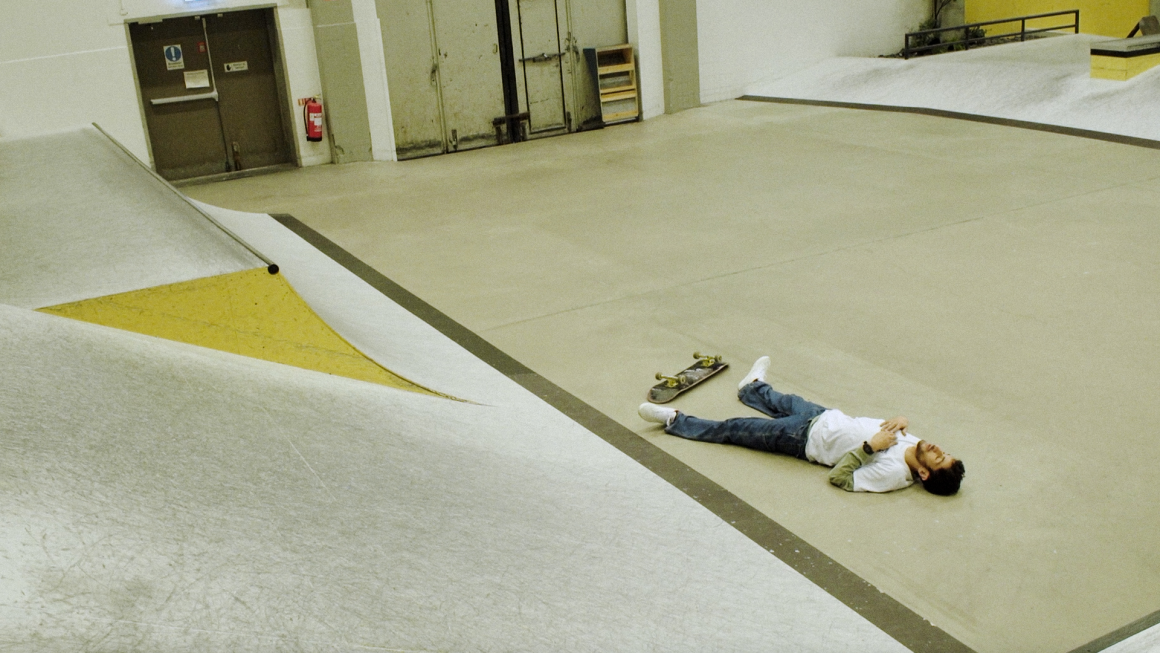
He is really a character. The best way to describe Aram is that he is a person full of joy. He loves enjoying life, and he spreads that joy and positivity to everyone around him. But at the same time, he can be very serious. I would say he is positive, happy, and always trying to do the right thing, even when he is unsure about what the right thing actually is. He is always trying to create something. He never sits still. He is very creative and constantly moving forward. Even when he doubts himself, he keeps going.
What message do you want to convey to the international audience that will watch Exist?
More or less, that skateboarding is so much more than just the act of skating. It can be political, like we mentioned earlier, and it can be a way to stand up for something. Skateboarding is powerful. There is no right or wrong way to do it. And in this case, skateboarding became a real tool to bring a message, which is one of the reasons why we made this documentary.
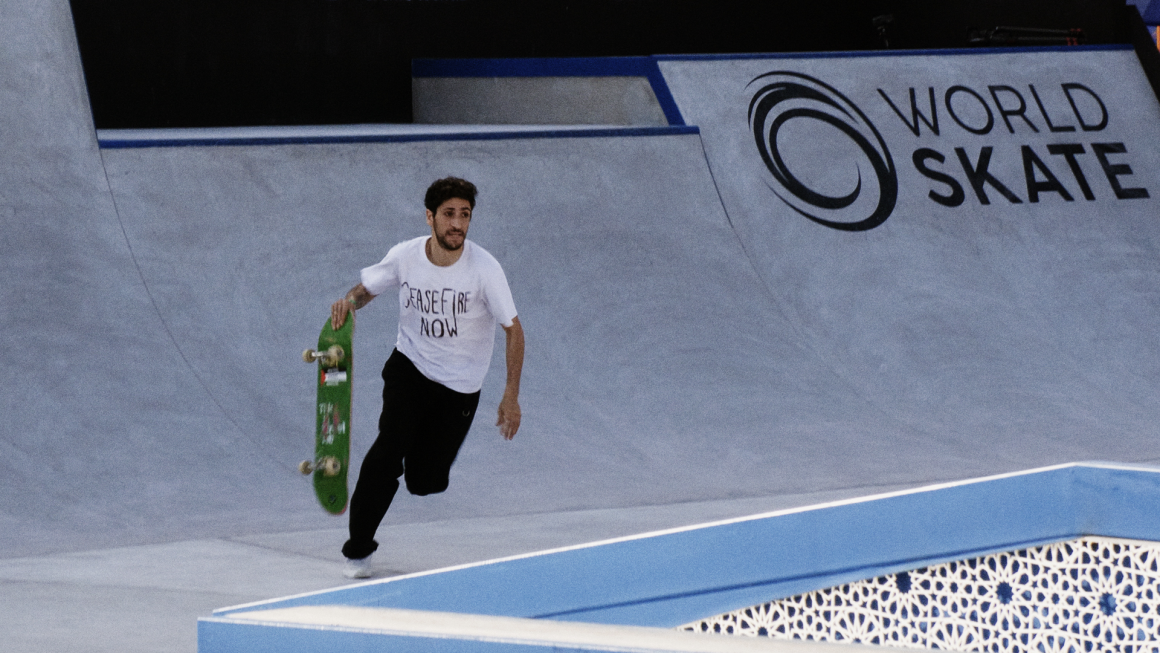
Aram did all the work. He represented. He put the Palestinian flag on that screen. He got people talking about it. He got us talking about it now. He used the opportunity of being at the Olympic qualifiers to speak about his country and its situation. It was not about points and it was not about qualifying. It was something bigger. You probably saw it in the trailer, when he revealed the “Ceasefire” shirt and all that. Even carrying a Palestinian flag in Dubai is not allowed.
Skateboarding is a very strong tool. You can use it in so many ways. In this case, it became a way to show resilience and resistance. It ties directly to the title of the documentary, Exist. They exist. His people exist. You can try to wipe us out, but we still exist.
Did you have difficulties during the process of filming the documentary?
Yes, of course. When you shoot a documentary like this, you cannot stage anything. Especially not the kind of documentary that Viktor and I wanted to make. You cannot plan moments. We tried to keep everything as pure as possible. There were a few interviews here and there, but apart from that it was just being present with the camera, putting a mic on Aram when possible, and seeing what happened. Then we shaped everything afterwards in a way that stayed true to what we had experienced.
So overall, everything went well.
What reactions have you received from the first viewers during the festivals you attended?
We have actually won three awards already, which is crazy. I never imagined that would happen. The first one we won was in Milan, at a skate and surf festival, and that one felt big. It felt like it really started something. The response has been very positive.
I think people did not really know what to expect. And that feeling is also present when you watch the documentary. It is about forty minutes long, so even though it is short, you get to know Aram. You see his humor, his joy, and then the serious moments. That mix is very strong in the film. It is raw, open, and honest about his journey. People have reacted very positively to that, and it has been overwhelming.
We also had a big screening in London at the London Palestine Film Festival last Wednesday. There were about four to five hundred people in the cinema. Seeing that, and hearing the applause afterwards, felt incredibly real.
And on the contrary, have you received negative feedback or criticism?
Not face to face. Of course, online you always get comments on trailers or clips. But nothing at a screening or in person. Some people may not share the perspective we present, but no direct confrontation has happened.
What do you think about skate media and some personalities in skateboarding who prefer to stay silent about what is happening in Palestine?
I think it is like that not only in skateboarding, but everywhere. People can act how they want. There are horrible things happening all over the world. I do not expect skateboarding platforms to post or shout about it. But if they do even something small, like donating to SkatePal or supporting in their own way, I am happy. I am not the type to point fingers and tell people what they should or should not do. And I don’t think Viktor or Aram would say anything different.
We simply try to use our platforms, and Aram does too, to reach people in one way or another.
All platforms can do what they want. But personally, I wish they would highlight more skate scenes around the world, not just Europe, the States or the Western world. Especially the bigger platforms. They do not necessarily need to highlight the tragedies, but they can highlight the communities.
Free Skate Mag did that with the SkatePal documentary. They included pro skaters, brought visibility. And what you are doing now as well, taking the time and asking these questions, is part of that.
What are your expectations for the screening at the PSFFF?
I am super stoked to see other films and meet people. I am excited to see the Skategoat documentary, that one is going to be amazing. But my expectations are simple: I just hope people come to watch. I do not care about the number. If it is you, me, and three other people, I am happy. If at least one person walks out thinking differently about skateboarding or about the situation in Palestine, then I am super happy.
And also to be there representing, because Aram, Viktor and others who are part of the documentary cannot be there.
What are your upcoming projects?
There are a lot of different things happening. The next skate project coming out is a part with Tom Botwid that we filmed for Poetic. That is the next skate thing.
Then I have also started working on other documentary projects outside of skateboarding. I am currently filming several things. But one project that I can mention, which is actually very skate related, involves Jimmy Gorecki. He is an OG skater from Philly. He used to skate for Ice Cream Shoes and has been involved in skateboarding for years. He was in Malmö recently.
He came to Love Park here in Malmö and saw it for the first time. I live close to it, so we met up. I filmed a small piece with him, some Super 8 footage and other shots. It is coming out next year. It is not a full documentary, but it has a documentary style, mixed with archival footage of him skating the old Love Park. It is a mix between skating and documentary in a way I have never done before. I am really excited about that one.
A last word?
I want to give a shout out and a huge thank you to everyone involved. Even if not everyone appears in the final cut, so many people were part of Aram’s journey, in big or small ways. Everyone behind the camera, in front of the camera, or helping along the way. Without all of them, we would not have made it to Dubai and back home to Palestine, and this documentary would not have been possible.
Exist will be screened this Saturday, November 29 at 12:30 p.m. at La Gaîté Lyrique as part of the PSSFF.