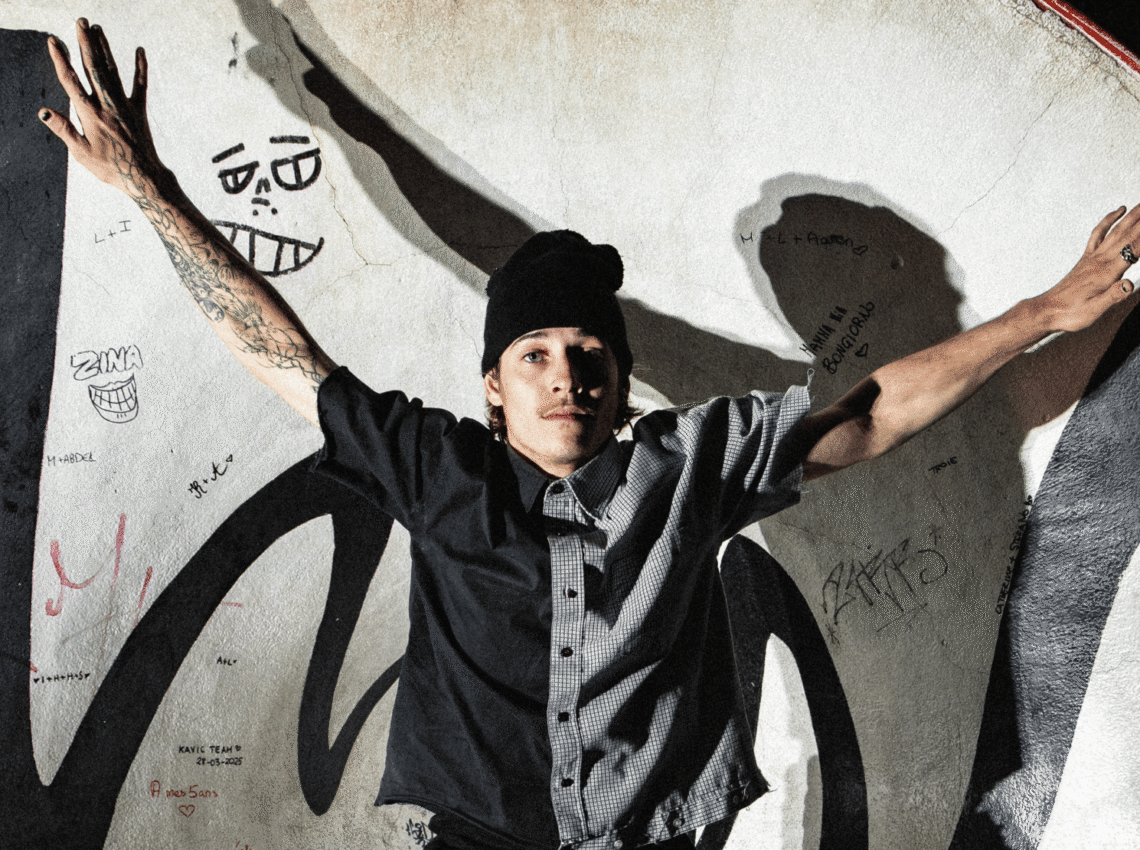


Magenta: 16 Questions for 16 Years
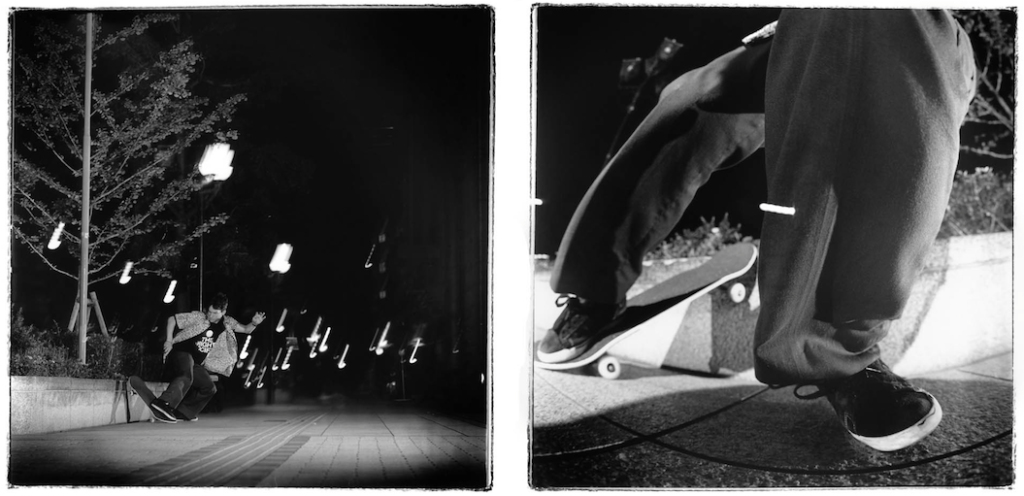
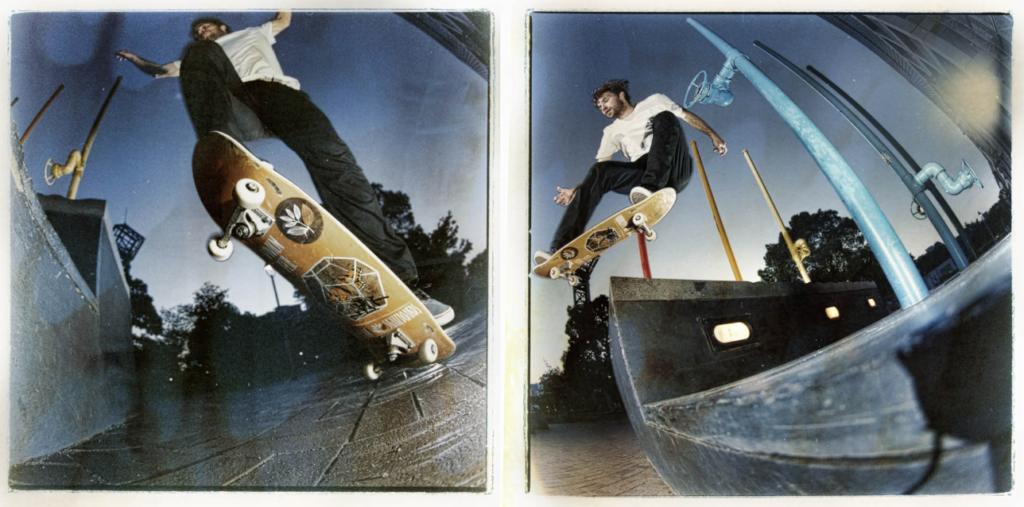
You can’t exactly say the French skate industry is thriving. Quite the opposite, in fact. Which makes Magenta’s longevity all the more worth celebrating. One of France’s skateboarding gems, the brand has played a major role in shaping what European skateboarding has become today. Magenta helped put a different approach to skating on the map, one that moved away from hammers in favour of a more low-impact style. The same goes for its filming, whether shooting with a long lens or getting up close with a fisheye. Both approaches have influenced more than a few people along the way.
16 years on, Magenta is still finding ways to stay relevant through its video projects. The brand has even opened a shop in Bordeaux, in the former Sirop d’Érable space at 57 cours d’Alsace-Lorraine.
We caught up with Soy and Vivien to revisit the ideas behind Magenta when it first started, and hear their take on skateboarding today.
1/ What made you want to start Magenta back in 2010?
Soy: We felt that the kind of skating we did every day wasn’t really represented by the skate industry. What influenced us most was mid-90s New York and San Francisco, followed a little later by England in the early 2000s. It was a very urban style of skating, neither overly technical nor focused on hammers. The point wasn’t to impress anyone, but to keep a certain street skating culture alive — a culture we’d become deeply involved in ourselves. We figured that if nobody else was doing it, we might as well do it ourselves.
Vivien: Palace had a similar idea around the same time, followed by Polar a year or two later, and that helped open the door for Europe within the skate industry. But when we started Magenta in 2009, Paris wasn’t yet part of the global skateboarding conversation in the way it is today. American brands didn’t always include it on their trips, even though we had an incredible playground here, one that had been largely overlooked and was just waiting to be discovered.
Soy and I had been flatmates for years, so I’d seen him draw and knew he had real talent. I also knew he had great taste in general.
Travelling to places like New York, London and Japan, I came across some incredibly inspiring projects run by small crews who skated, filmed, made videos, and produced quality boards and products. It made me realise you could build something like that without a huge operation behind you. At first, it was just me, my friend Soy and my brother Jean, with Leo Valls joining us as our first recruit.
I’m thinking of people like Fos in London, who was behind Heroin and Landscape, or Jahmal Williams, who founded Hopps in New York and takes care of a lot of things himself. And, of course, the crews at Tightbooth in Osaka and FESN in Tokyo, with the genius Takahiro Morita at the helm. All these independent projects had their own strong identities, full of colour and personality, and each of them influenced Magenta in its own way.
2/ When you first launched the brand, how did you imagine it would evolve over time?
Soy: Personally, I had no idea, and to be honest, I still don’t. Most of the brands I saw starting up around that time only lasted two or three years, while others managed to hang on a little longer without actually paying anyone. So I figured we’d probably last two years ourselves. Within a year, all our contributors were getting paid something. Not necessarily much, but whatever we could afford. We were the last ones to pay ourselves.
Vivien: We never had some rock-solid master plan. Magenta has always been about people who are passionate about street skateboarding and its culture. We simply wanted to do our bit by shining a light on something that felt a little overlooked at the time, but remains essential to us: the raw, everyday skateboarding of people who are genuinely passionate about it.
Skating without the showboating or the stunts, built around fun little spots, urban exploration, and connections with other crews and independent brands. Skating with friends, travelling, dreaming — that’s really what it’s all about.
We’ve always been committed to representing that culture and staying true to that direction. It’s also the spirit behind Connect, the festival Leo organises in Bordeaux.
3/ What has changed the most in the board and apparel markets since you started out?
Soy: Back then, the market was mainly focused on boards and hardware, with clothing playing a much smaller role. Today, skateboarding is closely tied to fashion, and all the major groups and luxury brands have moved into the scene. Since the Covid crisis, board sales have collapsed, and it’s become impossible to make a living from hardware alone.
But the biggest change, of course, is the landscape itself. Back then, pretty much all the brands around us were skate brands, of varying sizes. Today, there are loads of brands with nothing to do with skateboarding — luxury brands, sports brands, car brands, and so on — using its image without having contributed to its culture. In my opinion, they weaken that culture by reshaping it to fit their own codes.
Vivien: I agree with Soy that things have changed enormously. I’d also add that when we started out, we didn’t understand anything about the skate business. First and foremost, we were cultural players who wanted to create a brand because, to us, it was the best way to express our ideas about skateboarding. We figured out the business side of things as we went along.
One advantage of being based in Europe rather than the US is that we have a strong tradition of quality clothing made locally. So we moved in that direction fairly early on, whereas many American brands rely on standardised blanks manufactured in China. We started designing more and more clothing collections specifically for skateboarding, including jeans and trousers with triple-stitched crotch seams, because that’s always where they rip.
Hardware sales have slowed considerably over the past few years, which has pushed us to focus more on clothing.
4/ Do you think, like many people do, that skateboarding is going through a paradoxical period where it’s never been more popular, yet that popularity does little, if anything, for the skate industry itself?
Soy: Absolutely. Personally, I’ve always wanted skateboarding to remain more or less underground, independent, and in the hands of skaters, and I’ve done what I could on my own scale to make that happen. Things have taken a different turn. Today, the skate market is dominated by multinationals pushing it towards something more institutionalised, using a language that parents understand and city councils can get behind.
That’s changing the very nature of skate culture, and younger generations are coming into it in a very different environment from the one we grew up in. If the skate industry is going down the drain, it’s because the skate culture that made it strong is itself dying out, being replaced by something corporate, sporty, clean-cut and sanitised.
Vivien: Skateboarding today feels more like something that’s used by pop culture than something that’s genuinely popular. It’s used by advertising agencies as an easy symbol of youth and rebellion, endlessly playing up the Bart Simpson side of things, to the point where it risks becoming repetitive and cartoonish.
Skateboarding equals young rebel who does whatever they want and listens to nobody — the perfect consumer. It’s a little sad to see our culture reduced to that, but we do what we can to preserve the collective imagination and artistic spirit of skateboarding that have always inspired us.
5/ Alongside Magenta, Vivien, are you still listening to your lama groans, and Soy, are you still secretly living your life as influencer Roy Sunday?
Soy: Haha, Roy hasn’t been very active lately. I reckon he’s somewhere in detox… Or maybe he’s bought an island in the Pacific. You never know with him.
Vivien: It’s not very nice to call the songs of our good friend Serge groans. He doesn’t deserve that.
6/ What have been the toughest moments for Magenta?
Soy: Starting a brand is a bit like having a child. You’re constantly doing everything you can to make sure nothing bad happens to it, and some periods are more difficult than others. We’ve had a few scares along the way and had to rush it to the hospital a couple of times. Today, Magenta is fifteen, which means it’s a teenager — and being a teenager is complicated, haha.
Vivien: There are plenty of things that can get you down, like a supplier disappearing with your production deposit without delivering anything, shops closing down while owing you a big pile of money, or the euro crashing against the dollar at the end of 2014, wiping out your entire profit margin overnight because our boards are made in the US.
You have to pull yourself together quickly, find alternative solutions, and stay completely focused on the business for weeks, when all you really want to do is skate, go on trips and make videos… In moments like those, you definitely start questioning some of your life choices.
7/ What kept you going?
Soy: Here again, it’s like having a child. It’s complicated and stressful, but every day nothing serious happens to them, you’re happy. Or so I imagine, since I don’t have any kids myself, haha.
Beyond that, there’s also the idea of passing things down from one generation to the next. When I was younger, skateboarding introduced me to a certain culture. Today, I try to pass it on as best I can, so it doesn’t disappear completely.
Vivien: What keeps us going is the feeling that Magenta has a purpose and actually means something culturally within skateboarding. There aren’t many brands taking this approach and standing up for uncompromising street skating the way we try to.
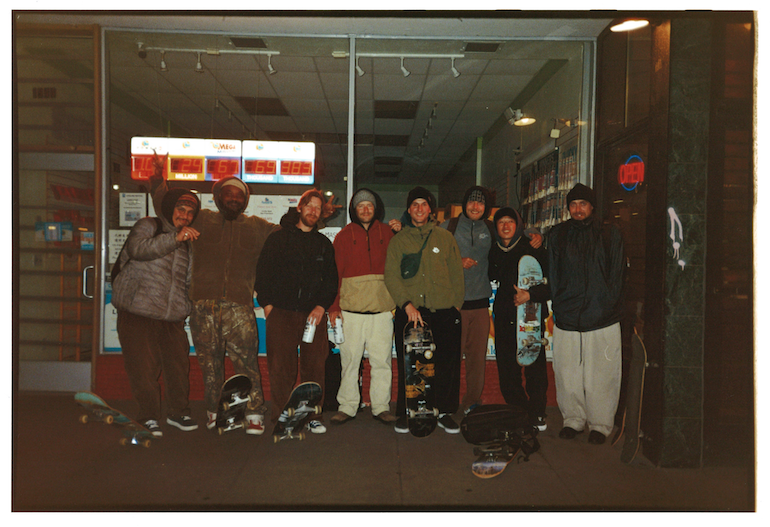
We’re supported by a network of skate activists and passionate people. Some have gone on to become distributors or open their own shops. There are magazines and crews all over the world that we stay in touch with. Being part of that community also gives us a lot of strength when things get tough.
8/ Carroll said in an interview with Jenkem that a lot of brands start losing their identity or relevance after twenty years. How do you stay authentic and innovative after sixteen years?
Soy: As long as money doesn’t end up corrupting everything, staying authentic comes pretty naturally. Magenta still represents the same style of skating it did back in 2010. But there are several layers to that question.
Personally, when it comes to art direction, I don’t think I’m trying to innovate in terms of the core idea itself. Where we need to innovate is in how we express it. A brand’s identity is like an abstract idea that you have to find a way to articulate clearly, using a language that doesn’t rely on words, but on graphics, videos, clothing and so on. So my approach is to keep refining that expression, to communicate the idea more clearly, while keeping the idea itself the same.
What does change, though, is the world around us. What Magenta stood for really resonated in 2010. People understood it immediately all over the world because it spoke to the times. A lot of people found the breath of fresh air they’d been waiting for in it. After fifteen or twenty years, the challenge is to find a way to express that same idea to people who barely speak the language anymore, because the world around them has changed.
Twenty years is a generation, and over the course of a generation, the landscape changes, and with it, in a way, the language. Take videos, for example. Back in 1995, you’d wait a whole year for a new skate video to come out. Today, you open Instagram and there are three thousand videos waiting for you every minute. How do you convey the feeling of that anticipation, of that scarcity, to a generation that has never experienced it? It’s difficult.
Vivien: When you do something authentic that stands out from the crowd, you create a new path that others will follow. Everyone takes inspiration from everyone else. That’s normal, especially when something works and gets a response.
It’s not so much that brands change, but rather that the things that made them successful and distinctive end up inspiring so many other people in the scene that, after a few years, it becomes difficult for newcomers to tell who brought what to the table in the first place.
That applies, for example, to the way we showcased cruising and a more laid-back approach to skating with Magenta, something distinctly European, even French. Or, more recently, the filming style popularised by William Strobeck, which has become the standard. In both cases, we’ve been accused of taking our respective approaches too far and becoming caricatures of ourselves once the thing became part of the wider skate culture and was picked up everywhere, often in a watered-down version.
Next to all the imitations, the original starts to look exaggerated, almost too personal. “Oh, Strobeck zooms in too much!” Once everyone is cruising around and showing a bit more of the streets, you start hearing people ask, “Why does Magenta make such a big deal out of that?”
That’s just the natural process of authenticity wearing thin over time. So you have to find ways to reinvent yourself without betraying who you are.
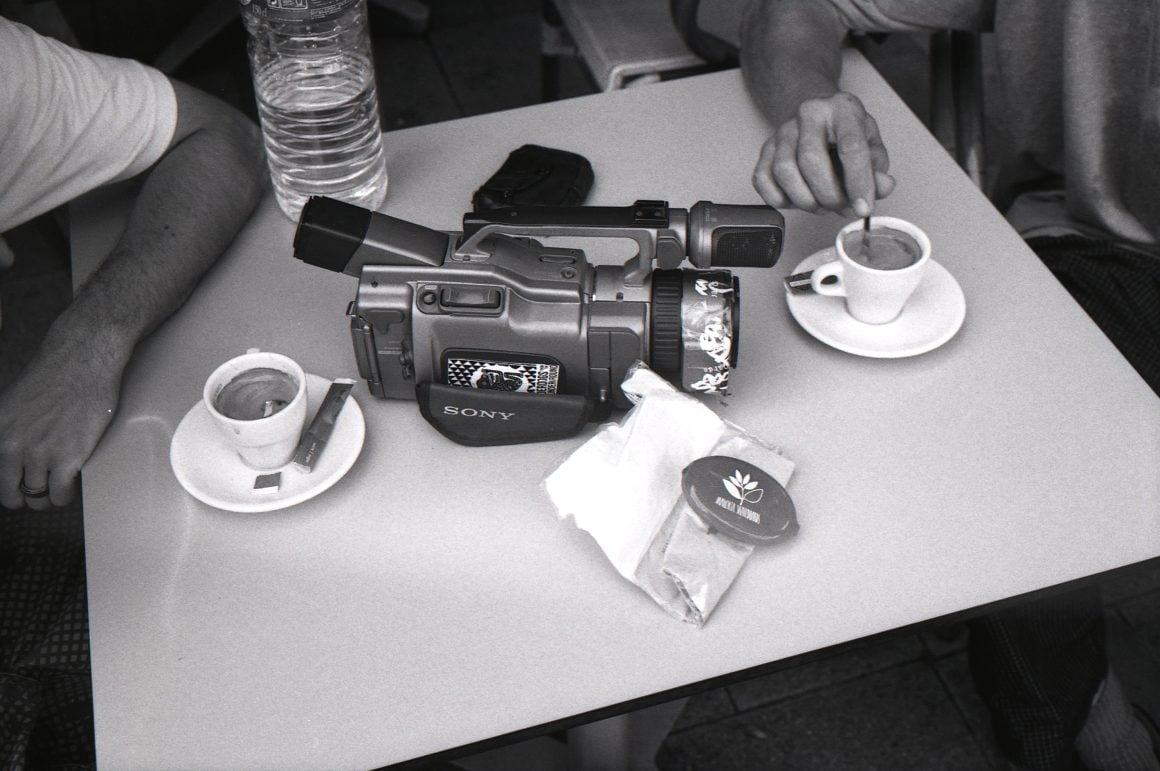
9/ What’s the secret to keeping a crew interesting to follow over so many years? You’ve added people like Ruben Spelta, Mike and Sergio to the mix along the way…
Soy: The guys in the crew are all people we met through trips or skate sessions, people who share similar tastes and who we became friends with long before they joined the brand.
Almost all of them have some kind of artistic practice outside of skating. Some shoot photos, like Ben Gore and Casey Foley; others paint, like Glen Fox, Ruben Spelta and Jeremy Jones. Then you have people who film or edit, like Vivien, Leo, Feugz and Luci. Morgan Campbell does collage, I work in illustration and design, and Hugo Maillard makes music…
They’re all proactive people who get things going and come up with their own projects. Generally speaking, they’re interesting people to begin with, and they remain interesting over time, whether they’re on a skateboard or not.
Vivien: We like people who are curious, open-minded and active in their local scenes, who don’t just sit around waiting for us to show up before getting things moving. The result is a pretty broad range of personalities, all of whom stand out in their own way and bring their own style and projects to the mix.
10/ What would you say about these three new additions to the team: Lili Werner, Wisse de Weerd and Noe Noris?
Vivien: Well, they’re all amazing. Lili has such a great vibe, she’s incredible, and it’s always a pleasure to have her out skating. She often comes to Bordeaux and crashes at the office. Wisse is hilarious and super talented. I can’t wait to get more footage of him. He’s coming over to France at the end of October to film. Noe is a dream to watch skate, so smooth and effortless, and such a nice guy on top of that. I’m really, really, really stoked.
Soy: Well, first of all, I can’t say anything bad about Lili because she’s staying at my place right now and might be reading over my shoulder. But honestly, I wouldn’t have anything bad to say anyway, because she’s literally the best. On and off the board. The first time I saw footage of her, I knew she’d become part of the family.
I met Wisse through a longtime friend of mine, Yannick from Public Skateshop in the Netherlands. I don’t know him that well yet, but I’ve already had time to see what a great guy he is, with a solid sense of humor and some serious skateboarding talent. I liked that.
As for Noe, he’s a friend of a friend of mine who lives in Los Angeles. He has a style you only come across once in a generation. I became a fan the first time I saw a clip of him. When I realized he was only skating Magenta boards, which he was buying himself, I reached out to him. We talked a bit, and he turned out to be another genuinely great guy. It just felt right.
Magenta has a complex personality that not everyone can embody. I’m really happy with these new faces. They bring a few new facets to the brand as it comes of age.
11/ I’ve heard you’re huge in Japan. What explains that success?
Soy: Japan has supported us since our very first board run. We were being stocked in Japan before we were even in some French skate shops. The Japanese have a lot of respect for French culture, and I think that helped.
Ipath was also really successful over there, so the fact that Leo and I both skated for Ipath may have played a part. Josh Stewart’s videos, particularly Static II and Static III, also helped put a certain style of skating on the map, one that we were part of, and those videos were huge in Japan.
Before Magenta, I skated for a London-based brand called Landscape, which was already distributed in Japan. In 2007, I went to Tokyo for a premiere of Static III, which featured my part. I stayed for a month and a half and met and skated with a bunch of guys, including Hiroki Muraoka and Katsumi Minami, who would later start Evisen, a brand that was actually inspired by Magenta.
Vivien joined me there for two weeks. Leo went over on his own in 2008 and met a lot of people too, including Takahiro Morita and the whole Libe crew. We quickly became close to the Japanese underground scene.
So when we launched Magenta in 2010, Uruma Masonori from Kukunochi, who was already distributing Landscape, got in touch with me about distributing Magenta. He’s still the one handling it in Japan today.
Vivien: I’ve analysed all the data, and it all comes down to Soy’s magnificent head of hair. In Japan, it’s a sign of fertility. The more curls you have, the more points you score. Naturally, they’re very interested.
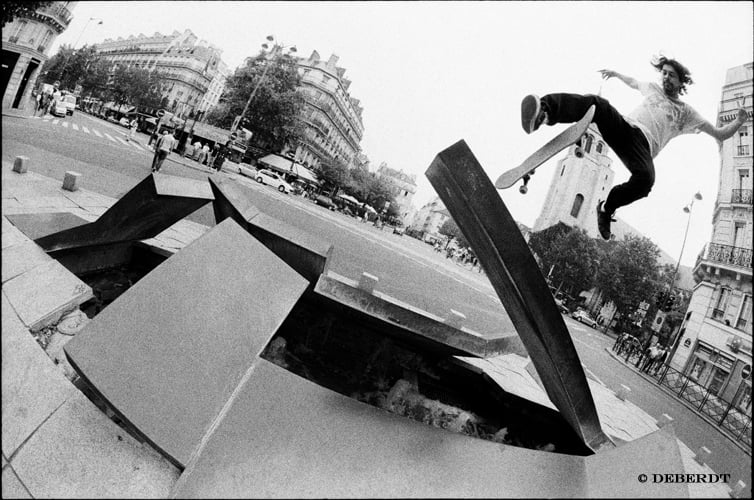
12/ Can a brand remain independent and sustainable in the long run? We’ve recently seen Soletech acquired by Nidecker, Lakai taken over by a shady character, and Element sold and bought back several times over…
Soy: Great question. Let’s see how long we last, haha.
Vivien: Can’t top that, haha.
13/ You regularly collaborate with other brands like Blue Flowers and figures such as Nick Jensen. Does longevity come down to diversifying, across clothing, videos and artistic collaborations?
Soy: I don’t think there’s any magic formula. Even though diversification is common, not every brand does it. Heroin, for example, has been around for more than twenty years.
For us, it’s part of Magenta’s DNA. The brand was born out of a small skateboarding microcosm, an international underground scene made up of people from all over the world who knew each other and were into the same things. In the early 2000s, a big part of that underground scene came to stay at our place, sleeping on the couch in the apartment on boulevard Magenta where I lived with my brother, and later with Vivien.
A lot of the people we’ve collaborated with over the years are guys we put up and have been friends with for a long time. Nick Jensen is one of them. I used to stay at his parents’ place every time I went to London, and by around 2005, I was going so often that quite a few skaters thought I was English.
Artistic collaborations were there from the very beginning. These were people we wanted to do things with, and bringing them into the brand through collaborations happened naturally. Over time, we also met new people, like Kendrick from Blue Flowers, who’d been a Magenta fan from day one. Once again, the collaboration came about very naturally.
Vivien: It’s important for a brand to have its own universe. A big part of ours is the skate community we’ve been involved in for years, which we now showcase through Magenta, whether through collaborations ranging from guest boards to joint video projects like Soleil Levant with our Japanese friends at Tightbooth and FESN.
I don’t know if that’s the secret to longevity — I’m not even sure there is one — but it’s definitely part of the story we have to tell.
14/ Which video best represents Magenta in its early days, and which one best embodies the brand today?
Soy: I’m not too fond of my part in it, but our first video, Microcosme, really captures Magenta in its early days. The intro by Vivien and Jean is beautiful, mixing a certain gentleness with cruising and dark humour. Then the video opens up with a Friends section bringing together different generations of the Paris, Bordeaux, Strasbourg, Marseille, London, San Francisco, New York and Tokyo scenes…
That was our way of saying that Magenta was a child of this family spread across the world. Vivien’s and Leo’s parts are beautiful. As for Magenta today, I’d probably say Just Cruise 2, since it features all the skaters currently riding for the brand.
Vivien: Microcosme, definitely. I also really like those early clips, which were very spontaneous. For the more recent era, I’d say Brutalista and Just Cruise 2.
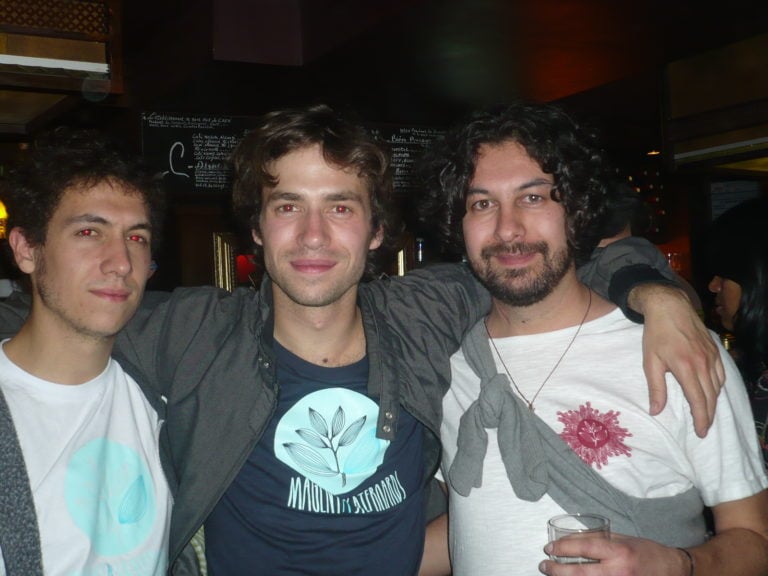
15/ What are you most proud of after fifteen years?
Soy: Having been able to pay tribute to so many of my childhood heroes through our Guest Boards. That’s something I’m genuinely proud of. The list is long, but to name just a few: Mark Gonzales, Ocean Howell, Brian Lotti, Kenny Reed, Quim Cardona, Mike Daher, Matt Field, Thomas Campbell, Ricky Oyola, Jack Sabback, Nick Jensen, Jan Kliewer, Jérémie Daclin, and more recently, JB Gillet.
Some are from my generation, while others are skaters I’ve looked up to since I was thirteen. Seeing how stoked they all are to have their name associated with Magenta, even if it’s just for a Guest Board, really warms my heart. Magenta isn’t a rich brand, and none of them did it for the money. They did it because they feel the brand is genuine and committed to underground skate culture.
Vivien: I’m happy we’ve been able to bring together so many talented skaters, photographers, filmers and artists, and above all, to see the great friendships that have grown out of it all.
16/ What’s next for Magenta?
Soy: We’ve just released a Guest Board with JB Gillet, a skater we’ve always been huge fans of. JB is from the same generation as me. We each had an interview in the same issue of Sugar, back in 2003, I think. We followed different paths — he was more influenced by Los Angeles and the West Coast, while I was more into New York and the East Coast — so we didn’t cross paths that often, but I’ve always had tremendous respect for his skating.
I was really happy to bring those two worlds together through this Guest Board. And we’ve got a few more great surprises in the works on the Guest Board front.
I’m continuing to work on improving the clothing lines, too. I’ve been getting more and more positive feedback, and I’m trying to make progress with every season. Putting out a collection has become a bit like releasing a new skate part for me: it’s difficult, stressful, exciting and rewarding.
Vivien: We’ve got quite a few things in the works: the first anniversary of our Bordeaux shop, a new VX1000 video that we hope to finish in the coming months, several collaborations planned before the end of the year, and plenty of surprises in the pipeline.