

From YouTube to Thrasher: How Chris Chann Earned the Skate Industry’s Respect

Chris Chann started his YouTube channel 13 years ago, at a time when core skating still looked down on that world. For years, the two worlds existed side by side without really crossing paths.
But things are changing. More and more pros are jumping on YouTube themselves, in something like a gold rush. Potential income, independence from brands, the urge to build a different kind of connection with their audience… The reasons are probably many. But in the end, it doesn’t really matter. That’s not the point here.
Because going the other way is a whole lot harder. Shaking off the YouTuber label to be recognized as a real skater by the core scene is another story. Yet that’s exactly what Chris Chann pulled off by dropping a part on Thrasher. A milestone that earned him core skating’s ultimate seal of approval. Sweet revenge.
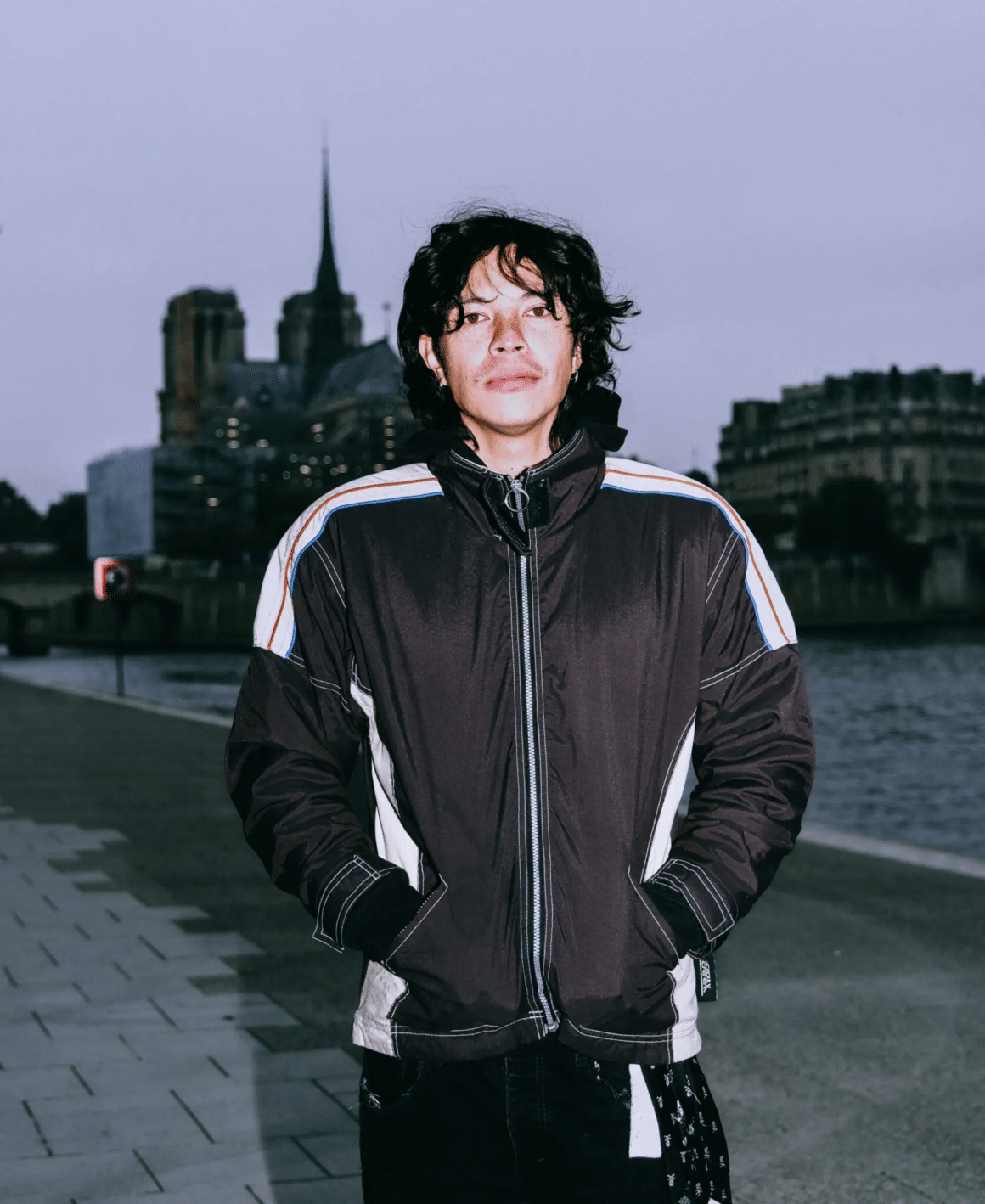
How is your trip in Europe going?
It’s going great. I started in Barcelona, then came to Paris, and I’ve been here for almost a month. I’ve made a lot of friends here. It feels really good to get away from home sometimes. It’s like a little reset, a fresh start.
You’ve already been to France a few times.
Yeah, a handful of times. I met Gabrielle in Strasbourg almost ten years ago. I remember we skated in front of the cathedral.
How important is it to you to travel with your parents?
If I could do that all the time, I would. Taking my parents everywhere would be the dream. They’re getting a bit older now, so it’s not as easy. In China, my mom had a hard time with people smoking everywhere, because of her asthma. Here in Paris she actually had to go to the hospital because of all the smoking. But I hope to keep doing it as much as possible, and hopefully travel with them again in the future.
China was especially meaningful, since it was the first time you went there with your father.
Yeah, going to China was a lifelong dream, because I’m half Chinese. And I got to take my dad, who is full Chinese but was born in the US and had never set foot in Asia. It was an incredibly emotional experience for both of us, a way to reconnect with our culture and our roots. Everyone was speaking Chinese to him.
Does he speak Chinese?
No. He just looks very Chinese. So communication was hard, we only used Google Translate. China is not an easy country to communicate in. Japan is a bit easier.

What does France have that the US doesn’t?
Where do I begin? First, I hate being stuck in traffic in LA. That’s not the case everywhere in the US, I can only speak for LA, where I live. Here I like being able to take the metro, get around by bike or just walk. Maybe it’s the stimulation, or just a bit of exercise.
I also really enjoy French food and all the products you can find at the supermarket. You can eat healthy back home, but it’s harder and more expensive, you have to go to high-end markets. Here good food is much more accessible. And I have stomach problems that go away every time I come here. I don’t know if it’s a placebo.
You started YouTube about twelve years ago. What drew you to the platform in the first place?
Around 2014, so almost thirteen years ago. I started watching YouTube in middle school or high school. I discovered a few YouTubers making funny skits and science videos, and that’s how I found vlogging. I felt like I could relate to these people online. As a kid it was refreshing, you discover a small niche community. Everyone was watching TV shows, while I was following YouTubers.
The first channel I really watched was Charlie Is So Cool Like, with science videos and skits. Then I found other comedy channels, like Life According to Jimmy. It was almost before the vlogger era. People just sat at their desks making videos.
At first I wanted to make funny videos with my friends. Then I found out there was a monetization program, and in high school, the idea of making money on the internet sounded amazing. But I was too shy and didn’t dare to start. It took me four or five years before I finally bought a camera.
What changed everything was going to a YouTube convention. For the first time I saw a bunch of people with cameras filming themselves. It’s like being a skater who has never met other skaters and walking into a skate park for the first time. Seeing all that gave me confidence. I’m still shy today, but that experience helped.
Did success come quickly?
No, it was very slow. I remember being super happy to get one subscriber a day, and that went on for a long time. It’s really hard to grow in the beginning, so any little progress means a lot.
Did you start making skate videos at the same time?
I started with funny skits with my friends, but they always ended up giving up, so eventually I did too. Then, a year or two later, I bought a tripod and started making skate videos. I asked people to suggest tricks in the comments, then tried to learn them. That’s how it all started.
Is YouTube how you make your living now?
It used to be. The past few years I’ve spent my time working on this video part, so I stopped posting. The channel still makes a little money, but probably not enough to live on. Now that the project is finished, I’m going to think about what’s next on YouTube, my career, my social media and a new creative direction.
Did you ever try to get sponsored the classic way?
Yes. Around 20, when I was in college and still figuring out my path, I made a video part and submitted it to a CCS contest. It was my last attempt at getting a sponsor, and I didn’t make it. So I decided to focus on school. That ended my dream of becoming a pro skater.
But I eventually got flow and products in other ways, through YouTube. That was really amazing. I felt like a kid who didn’t deserve it, getting boxes from brands. I was very grateful. I felt like an unsponsored skater who ended up sponsored.
Your YouTube approach is different. You post less but with better quality, and your titles and thumbnails stay low-key. Is that deliberate?
At one point I did clickbait, with totally crazy titles. But I got tired of seeing it everywhere online, and I think a lot of people did too. I might still do it a little sometimes. In the end, I think people want something more honest and transparent, and I feel better writing a title in that spirit. I try to make things that don’t feel fake.
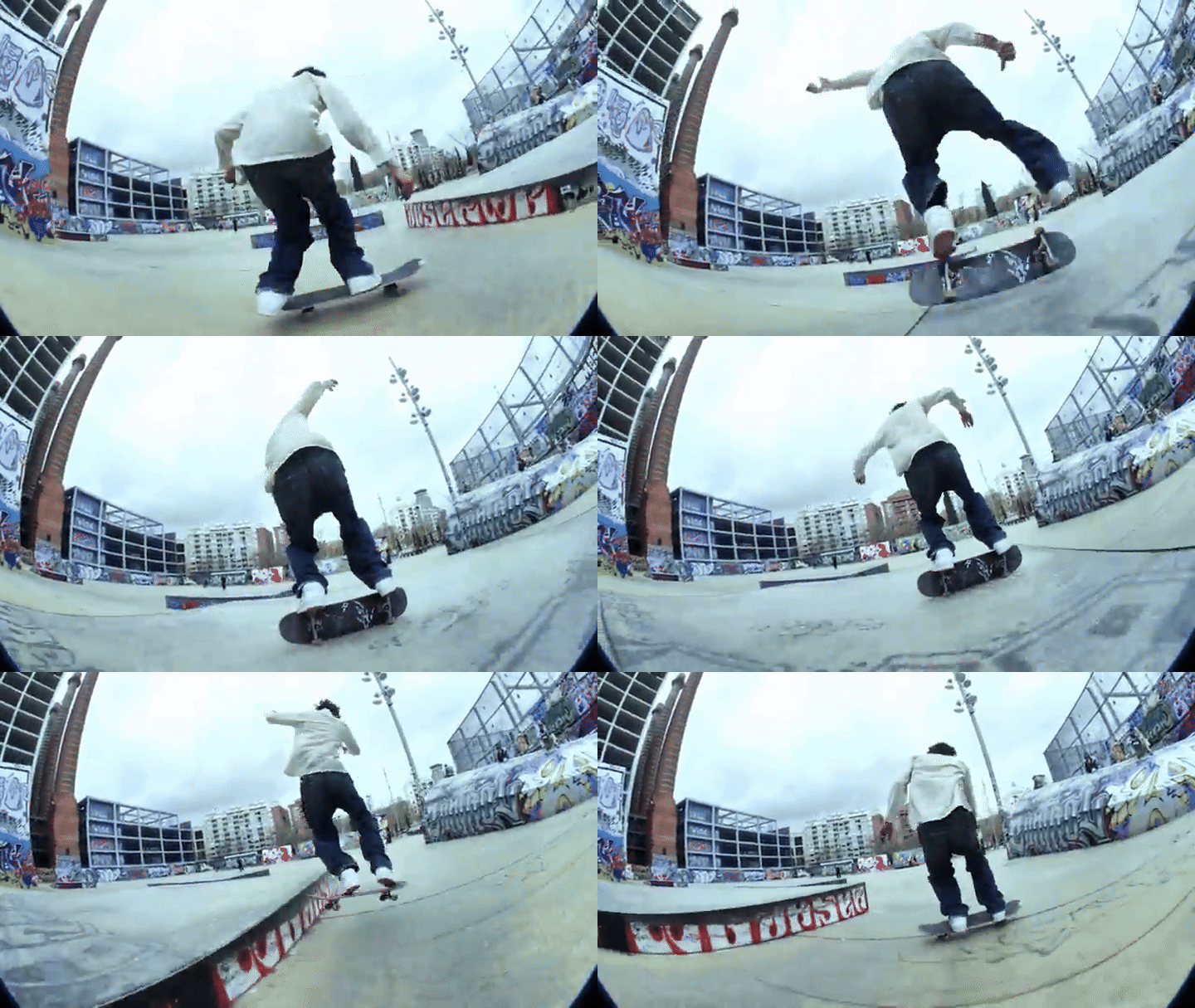
It’s the same on Instagram. You post very little, but your tricks almost always go viral, like the shove-it at MACBA. What’s your secret?
I’m just trying my best to entertain people and do things I find really cool. I’d hate to post something I don’t like. Sometimes it’s luck, and sometimes I work really hard to land a trick. I’ve had posts that didn’t work too, but lately it’s been going well.
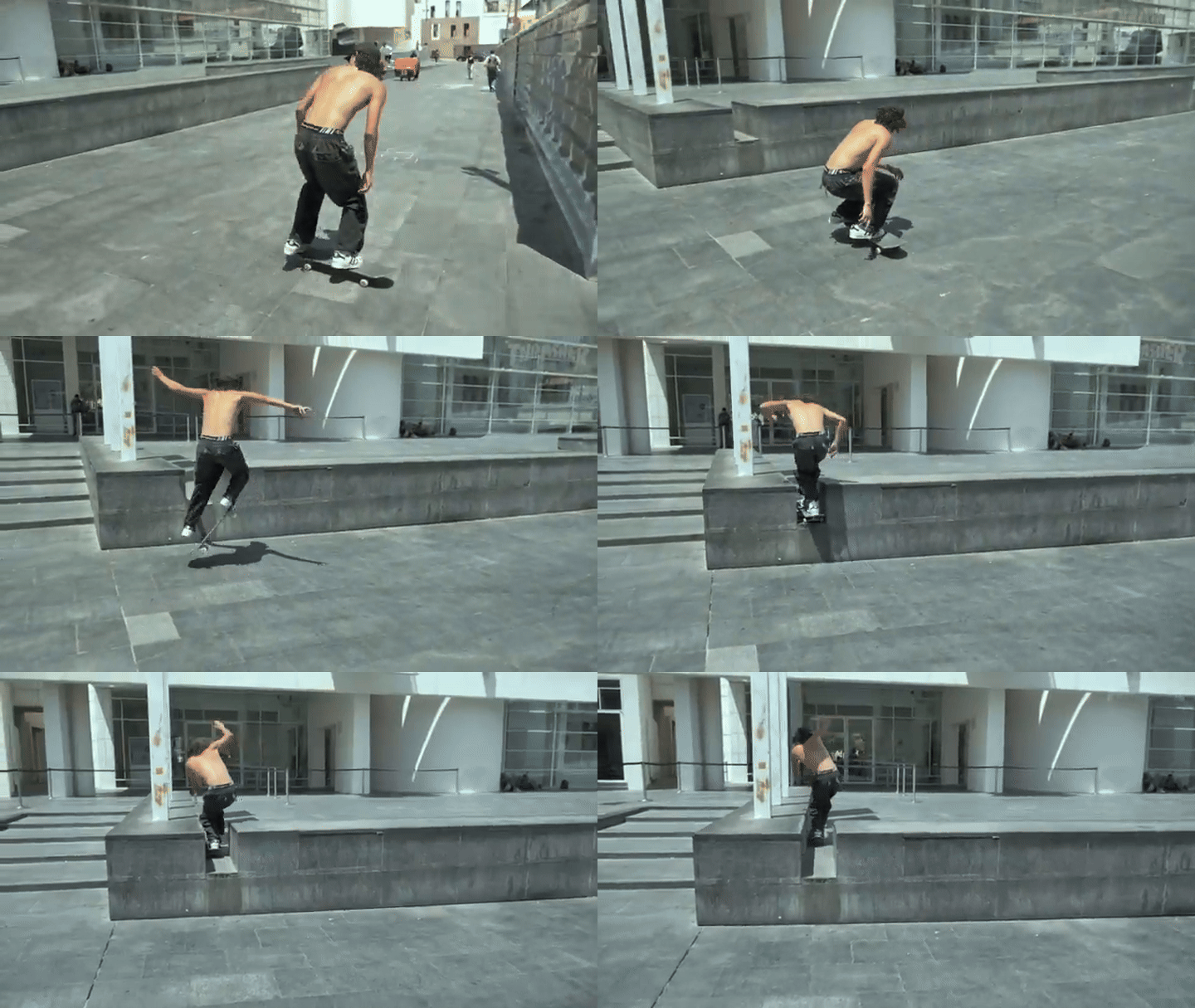
The shove-it at MACBA came from a conversation with Richie Jackson, one night when I was walking past the spot. I told him, half joking, that doing a trick there would be my dream trick. Then one day I went for it and started trying. And it worked. [Ed. note: he later did a half cab there in his Thrasher part.]
Do brands support you?
Adidas sends me shoes, and for a while I was getting boards from Deluxe. Jim Thiebaud helped me out a lot. He’s one of the few people who supported me from the start. In Barcelona, while filming the part, a skate shop called Rufus, where I bought my boards, sometimes gave me boards and discounts. That was really cool. A few brands sometimes reach out to send me products, but I haven’t really been in the circuit for about three years.
More and more pros are starting on YouTube: Chris Joslin, Kader, Nakel Smith, and even Andrew Reynolds started a channel. Before, it was seen as not very cool. What do you think?
When I started, it wasn’t even seen as lame, simply because the scene was still so small. I think it’s great to see things evolve. It’s a good thing that people aren’t afraid to express their creativity anymore. Skating can get a bit monotonous, because everyone is afraid of criticism and what others think. There’s so much creative potential left untapped just because people don’t dare to start. So if YouTube helps some people find inspiration or confidence today, I think that’s great.
What’s the secret to a vlog that isn’t cringe to watch?
As hard as it is, and I struggle with this myself, you have to be yourself. You’d think it’s easy, but it’s really hard. You judge yourself, you think you’re not funny, and you end up changing who you are.
So you play a character?
I try not to, but sometimes I do, or I try too hard to be funny. You have to find a balance between staying authentic and not making something so boring that no one watches. Some people just want to document their daily life, and that’s great too. Personally, I prefer to come at it from an entertaining angle. I don’t particularly want to share my personal life. I want people to laugh or smile, to escape reality for a bit.
Do you think you’ve found the right balance?
I don’t know. That’s not for me to decide, it’s for the audience. But to answer your question, anything that sounds fake or lacks authenticity is cringe to watch.
Have you ever felt disrespect or resistance from traditional skateboarding, because you’re seen as a YouTuber?
A little, a handful of times, but nothing crazy. Most people have been nice. And I don’t think I’m a special case. A lot of pro skaters get criticism and hate too. I don’t think YouTubers have it much harder. We’re all just trying to get by without embarrassing ourselves.
Maybe it’s easier because you’re a really good skater, so it’s hard to criticize you on that.
I hope so. It’s hard to say. I’m sure a lot gets said about me that I never hear, and that’s good. That’s part of the game. If everything were perfect and positive, with no criticism, it would be boring too.

Did you read the article Thrasher published in 2023, a parody tutorial on how to start a YouTube channel?
I didn’t read it, but I heard about it. Honestly, criticizing “YouTubers” in general is so vague that it doesn’t mean much. I don’t think Thrasher really took it seriously. It’s like saying all skaters are the same. It’s not about the platform, it’s about the person and the content. There are so many YouTubers I watch and love, and I don’t find them cringe at all.
How did you connect with Thrasher for this project?
Through Jim Thiebaud at Deluxe. [Ed. note: Jim Thiebaud just announced he’s leaving Deluxe, replaced by Frank Gervais.] It came up in a phone conversation. He told me to send him the part and he’d pass it on to Tony Vitello. I really didn’t think they’d like it, because I’m a YouTuber. But they said it was great and they were down. And I thought, this is really going to happen, and it’s going to be huge.
Leading up to the release, I was really nervous. On my own channel, I know my audience, people who already follow me and are naturally more likely to like what I do. But Thrasher was a whole different story. I was putting myself in front of a different audience, with the risk of getting torn apart if the part didn’t land. Even a week before it came out, I was watching it and asking myself: “What if it actually sucks?”
But the reaction was incredible. I was completely blown away. It hit me right in the heart. This is my life’s work.
I always told myself I don’t need validation, and I’m happy. But Thrasher has that power, it’s like the badge of approval. And in the end, it’s mostly people’s reactions that gave me that recognition. It’s like a childhood dream resurfacing. I gave up on going pro at 20, but I never stopped wanting to be a good skater and keep progressing. This was the moment for me.
When you had that call with Jim Thiebaud, was the video already finished?
I had about 90% of the footage. The part was almost done, but I still had a few tricks to film and the editing to do. The call was early in the year, maybe January or April. It took a while to land the last tricks and edit everything.
Did you feel any particular pressure filming the last trick, knowing it would come out on Thrasher?
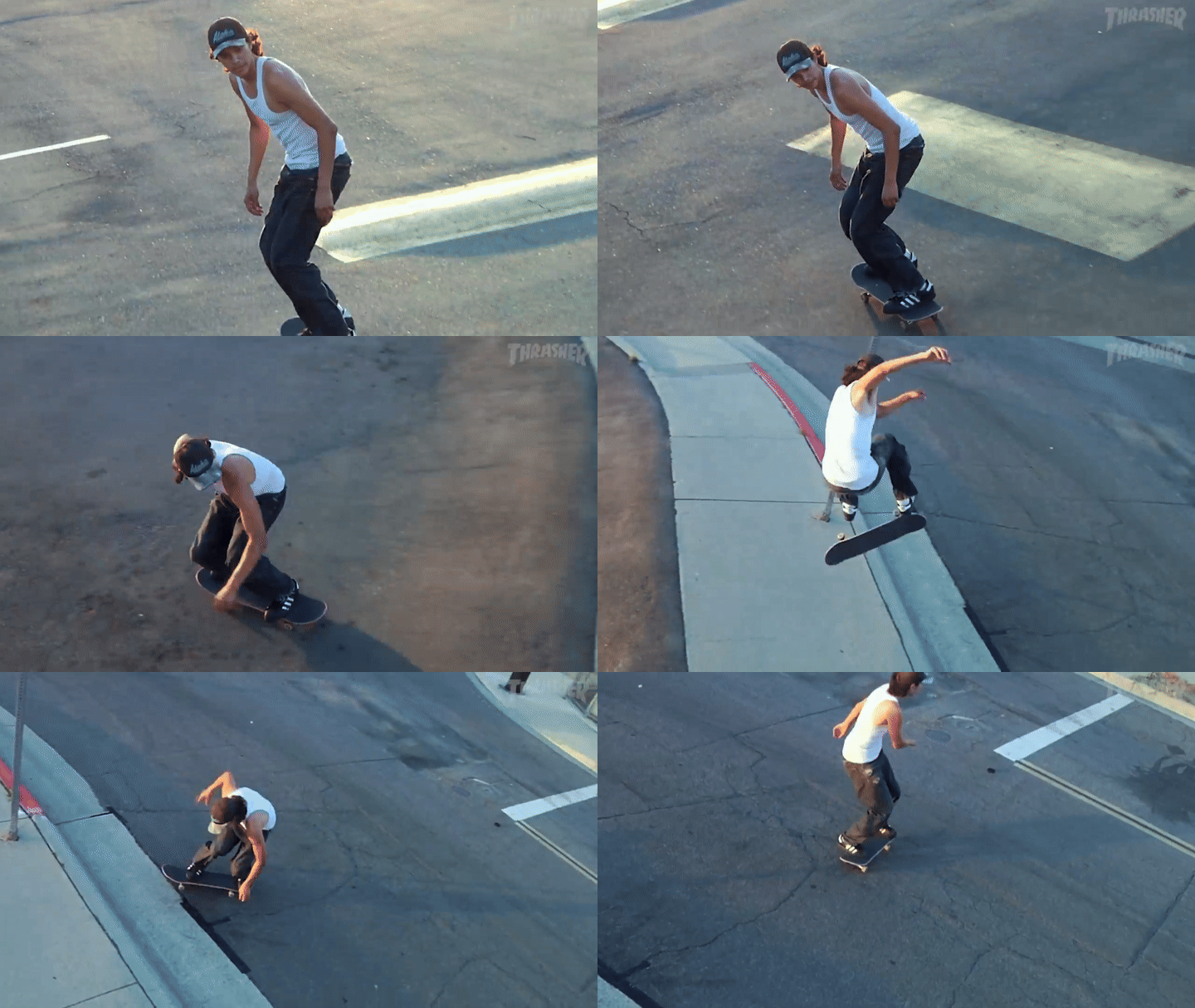
Yes. I was trying to land a switch frontside 360 heelflip. I thought the last trick would take three to five sessions, but it took nineteen. It was really starting to get to me, that one trick was all I needed to finish the part. And you don’t want to sit on footage too long, because it ends up feeling dated.
You also held premieres before the release, including one at Le 39 skate shop.
Yes, in Tokyo, Shanghai and Paris. It was great to share that moment with people. I had never done a premiere before. Everyone was so excited, and it was very emotional every time. To be honest, in Tokyo I even cried.
Where did the idea for the ender come from, the primo grind on the rail?
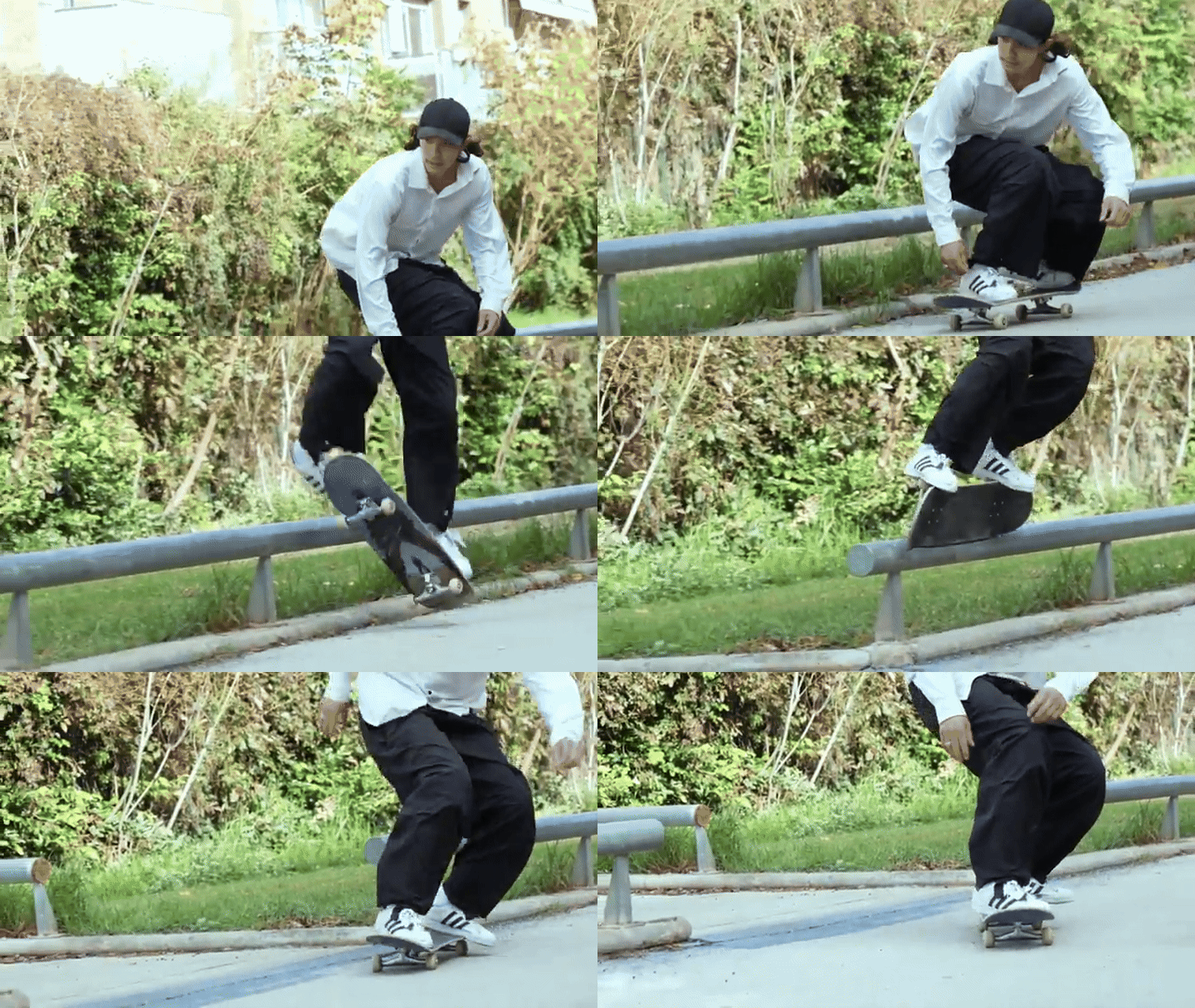
There’s a YouTube video of a guy accidentally sliding a handrail like that. I saw it a long time ago. I started thinking about it around 2021 and started trying it in 2022. There’s an iPhone clip of me placing the board on a rail, running and jumping onto it, just to see if it would slide. And it worked.
You also had to find the right rail.
Yes, otherwise the trucks get stuck. The rail we found in Barcelona was really difficult. There’s grass on the other side and another pole a meter or two away that you have to go around. It was the only rail in the world I could find. I searched all over LA and Spain, on Google Maps, on skate spot Instagram accounts and through my whole network. We probably checked a dozen flat bars in LA and many more in Spain. Finding the right rail was really hard.
Did you kind of invent a new grind?
The primo already existed, it was invented by Rodney Mullen. But you never know, maybe some kid in a village somewhere, or in Brazil, already did it on a rail before me. You can’t say Chris Joslin invented the tre flip down El Toro. He just did that trick at that spot. Same for me. I took a trick that already existed, but on a new obstacle. A pogo slide on a rail, for example, might be a different story. But today, there aren’t many tricks left to invent.
Have brands reached out since the part came out?
I got a lot of messages and some compliments from people who work at brands, but no offers.
What’s next for you?
Right now I’m still figuring out my path. I want to do something creative, and I’m really excited. I definitely plan to keep making videos. I’m also working on my small brand, unsatisfied.net. It’s still a modest project, but people can buy products there if they want to support me. I try to make creative things for it. It’s all still at an early stage. So I’m taking time to think about what’s next and find my next creative direction, while still skating for fun above all.
Chris Chann YouTube Channel
Chris Chann’s “Forever Unsatisfied” Part